TRUSTED EXPERTS
ANY DEVICE


Raid Recovery
Raid data recovery requires the highest level of expertise.
With years of experience in the data recovery field and qualified technicians working around the clock, 24 Hour Data has the technical expertise to handle complex RAID recoveries. The process becomes much more complicated when dealing with a failed hard drive which is part of a RAID array, and this is why it is important for professional, experienced specialists to handle the recovery.
-

RAID Drive Failure
-
RAID Controller Failure
-
RAID Array Corrupted
-
RAID Configuration Lost
-
RAID Degradation
Get a free quote today
At 24 Hour Data we always give a full evaluation and free quote to all of our clients. You’ll know exactly how much data is recoverable and how long the process will take before making the decision to proceed.
Start A Recovery
Get Started Below

SUCCESSFUL DATA RECOVERY
OR NO CHARGE!
Our customers store all types of data on these advanced drives, and we have successfully performed data retrieval for individuals, small businesses and Fortune 500 companies. We can usually perform a successful recovery operation within 24 to 48 hours. If, for any reason, we cannot retrieve the data from your device, there's no charge for our service.

Important RAID data recovery information
-
Do not try to rebuild or reinitialize your RAID
-
Do not run FSCK on your RAID
-
Do not run CHKDSK on your RAID
-
Leave RAID Data Recovery to the Experts
Superior Recovery Process
Our RAID Data Recovery process involves state of the art resources and proprietary technology which allows 24 Hour Data to reconstruct and recover data from all types of RAID arrays. Our recovery rate on complicated RAID 0 arrays, and all other RAID types is above industry standard and affordable prices.
RAID array data recovery capabilities
-
RAID 0,1,5,10,50 and all other types
-
All RAID controller types
-
All RAID controller manufacturers
-
All Network Attached Storage (NAS) Devices
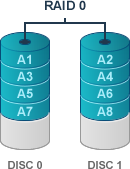
RAID 0: Striping With No Redundancy
RAID 0 stripes data across multiple drives. RAID 0 is the least secure RAID level since one drive failing will bring down the array. The data is split up in blocks that get written across all the drives in the array. By using multiple disks (at least 2) at the same time, RAID 0 offers superior I/O performance. This performance can be enhanced further by using multiple controllers, ideally one controller per disk.
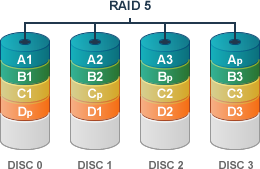
24 Hour Data recovers all RAID systems & cards including:
Raid Systems
-
Compaq - ProLiant Series
-
Dell - PowerEdge Series
-
IBM - IBM XSeries
-
HP - ProLiant (CPQ)
-
HP Integrity
-
HP NetServers
-
Apple - XServes, XSAN
-
Apple RAID
-
Gateway Servers
-
EMC
-
Network Appliance Filers
-
Quantum Snap Servers
-
LaCie Portable RAIDs
-
Buffalo NAS/RAID Server
-
Sun Microsystems
-
Intel & AMD servers
-
Intel & AMD RAIDs
Raid Cards
-
Perc
-
LSI
-
Promise
-
Adaptec
-
Apple
-
3Ware
-
Supermicro
-
Areca
-
CalDigit
Our Happy Customers



 I received the recovered files from my LaCie drive today and am in a total state of euphoria! Absolutely everything that I needed was recovered and, more than that, some extremely important files that will mean so very much to a lot of other people. There is no way that I could possibly be more pleased with the outcome.
John Stephens
Jail Hill Imaging